n Ordino’s 2023 local election, Maria del Mar Coma won 55.64% of the vote and Enric Dolsa 44.36%. Yet the final institutional result was not 6–4 or anything close to the voters’ actual split. It became 8 councillors to 2 — 80% of the institutional power versus 20%. The voters did not create that supermajority. The electoral law did.
This investigation examines whether Andorra’s justice system has the structural safeguards required to guarantee genuine judicial independence in one of Europe’s smallest and most interconnected states.
What happens to the right of defence when a lawyer who criticizes a judge, prosecutor, police officer or state expert can be fined, prosecuted, disciplined—or permanently removed from the profession—by that same system?
This documentary podcast examines 18 legal cases connected to Andorran lawyer Emili Campos and asks a difficult question: when does persistent and combative legal defence become a threat to institutional stability, and when does the institutional response risk becoming a mechanism for containing an uncomfortable lawyer?
Can a magistrate with no publicly documented law degree serve as rapporteur in a constitutional case involving privacy, sensitive personal data, and fundamental rights?
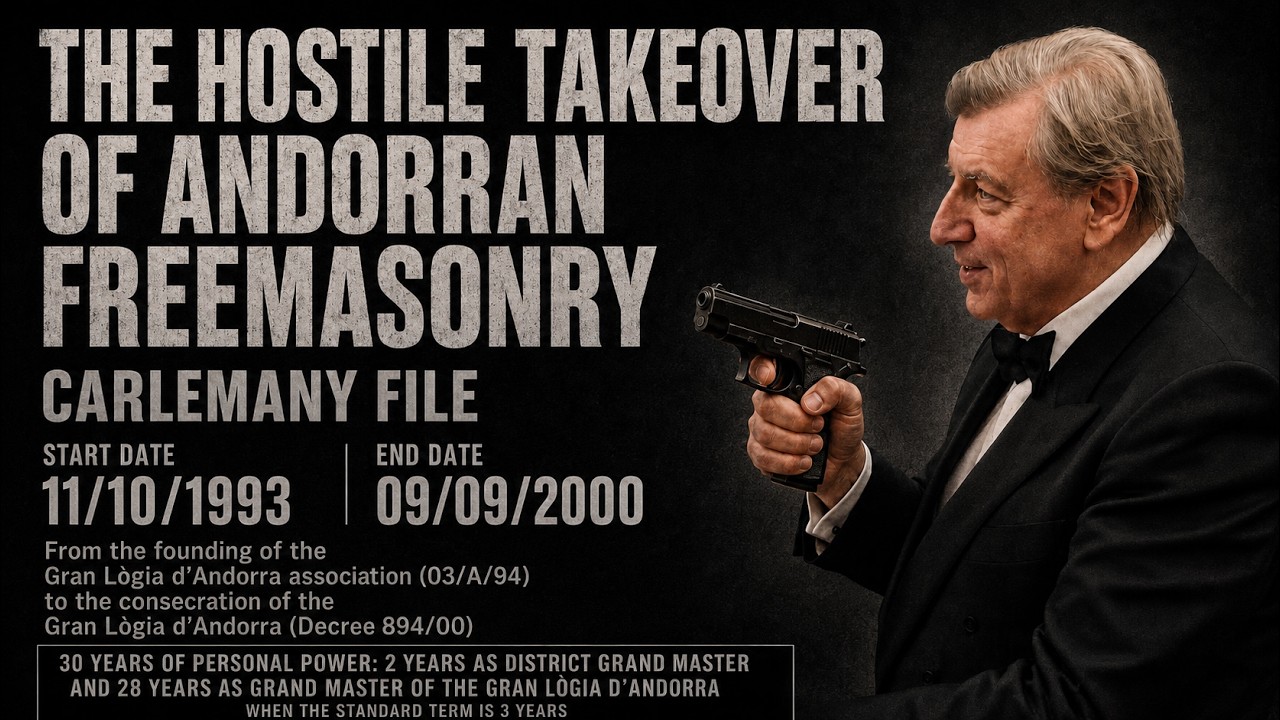
On 1 June 1996, a ceremony was held in the Principality of Monaco that, according to the documents examined in this investigation, marked the foundation of a Masonic jurisdiction for Andorra.
For months, we have examined judicial files, contradictory rulings, conflicts of interest, recusals, pre-trial detention, court auctions, administrative opacity, data protection failures and lives destroyed by endless proceedings.
An independent investigation by Inglourious Basterds, S.L., based exclusively on court judgments, official regulations, BOPA publications and other public documents, examines one of the most puzzling lines of reasoning found in Andorran administrative justice.
The disappearance of more than 400 kilograms of original 35mm negative became a turning point in Josep Guirao’s career. After exile and his confrontations with Andorran institutions, he turned to technology in search of a system that could free creators from laboratories, physical media and intermediaries capable of…
At just 21, Josep Guirao was already publishing in Poble Andorrà, covering theatre, culture, accidents, international conflicts, nuclear energy, military affairs, interviews and institutional issues.
 Ver vídeo 46:28 · English